

 Image 1 of 1
External Purchasing links
Why the Book is Important
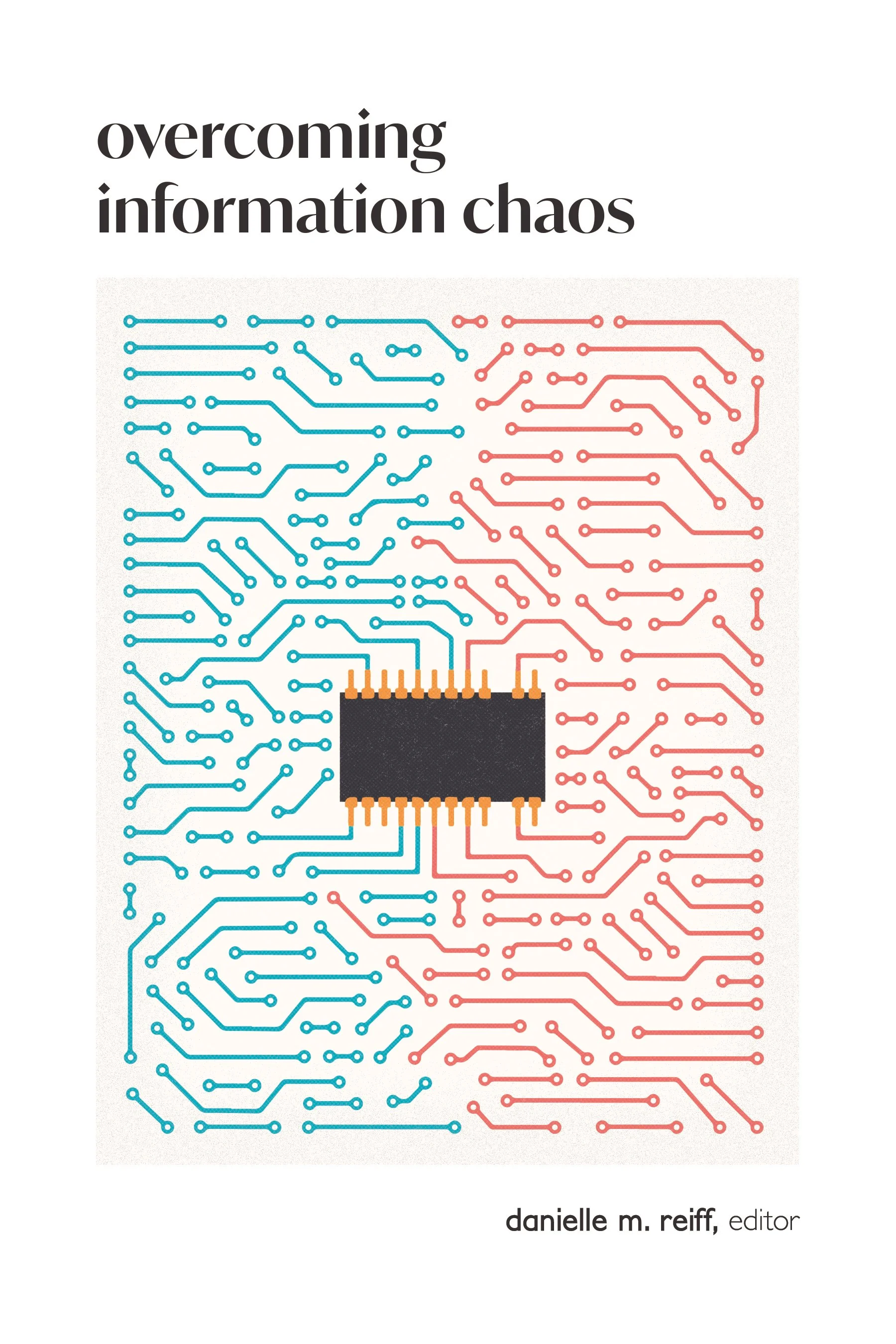
Just a few decades into the digital age, we are learning the hard way that divisive information can contribute to widespread social and political polarization. How can we heal those divisions and cultivate healthier, more peaceful communities?
There is good reason to raise alarm bells about political polarization in the US. When grievances over inequality or election integrity erupt, a country can be at greater risk for political violence. Rapidly spreading misinformation and disinformation can exacerbate societal discontent and divisions.
Media literacy is a new and essential element of peacebuilding in the digital age. This book helps us understand how the media ecosystem has changed since the digital transition. It also provides practical guidance to help all citizens sort through the massive quantities of information we encounter daily, mitigate the diffusion of disinformation, and lean into constructive civic engagement that bridges our divides and builds community.
In the digital age, peacebuilding starts with learning to use the media responsibly. Ultimately, it's up to each of us to slow down and be savvier in our interactions with information and each other.
Table of Contents
Part I: The Nature and Consequences of Information Disorder
1) Media Literacy Can Overcome Divisive Biases; 2) What Is Information Disorder?; 3) Can We Trust Digital Information?; 4) Can We Prevent AI from Accelerating Information Disorder?; 5) How Information Disorder Threatens Democracy and Fuels Political Violence
Part II: The Evolution of the Media Industry into the Digital Age
6) The History of Information Disorder; 7) Does the Mainstream Media Still Matter; 8) The Challenge of Declining Local News
Part III: Our Best Defenses Against Information Disorder
9) Can Laws Mitigate the Divisive Impacts of Digital Information?; 10) How to Discern if Election Information Is Real; 11) Strategies for Cultivating Healthy Information Ecosystems; 12) Media Literacy for Civic Engagement and Social Cohesion; 13) Media Literacy Unites People at the Local Library; 14) Mormon Women Leverage Media Literacy for Peacemaking; 15) A Peacebuilder’s Manifesto for the Digital Age
About the Authors | Appendices | Endnotes | Index
Endorsements
About the Authors
-
Danielle M. Reiff is the founder of Peacebuilders, a national initiative to inspire citizens to work together to build collective resilience against powerful attempts to divide us. Her writing has been published in Newsweek and other publications. A retired American diplomat, Danielle has worked to promote democracy and peace around the world with the US Agency for International Development (USAID). For more about Danielle, visit peacebuildersunite.com.
-
For fifteen years, Tara has supported democracy, independent media, and civil society organizations around the world. Most recently, Tara was a senior technical expert at IREX, a global development and education nonprofit. She has also worked at Internews and the World Bank Group. She has taught courses on disinformation, media literacy and media development at the University of Maryland, The Great Courses, and George Washington University.
-
Rachel is a risk intelligence professional who specializes in analyzing disinformation, hate speech, and extremism. While working with Microsoft’s Democracy Forward initiative, Rachel supported the company’s information integrity, journalism, and AI literacy workstreams. Prior to that, Rachel served as an intelligence analyst at Concentric where she authored hundreds of intelligence products assessing open source and dark web threats. Rachel also researched foreign disinformation campaigns that targeted democracies, in collaboration with Army Cyber Command’s Virtual Student Federal Service and the Rotary International’s Peace Fellowship. She served two years as a Fulbright grantee teaching high school English on Jeju Island, South Korea. Rachel earned her bachelor’s degree from William & Mary College and her master’s degree from the University of Bradford in England.
-
Dr. Southwick is an international legal scholar and consultant on the rule of law, atrocity prevention, and human rights. Most recently, she was the key researcher and coauthor for the US Holocaust Memorial Museum’s resource titled Criminal Justice Approaches for Preventing Mass Atrocities. For the American Bar Association Rule of Law Initiative, Katherine implemented programs throughout Southeast Asia relating to judicial reform, anti-trafficking in persons, and the ASEAN human rights system. As a researcher with Refugees International, she released reports on reducing statelessness in Bangladesh, Kenya, and Ethiopia. Katherine has also worked as a federal judicial clerk, assisted prosecutors in the trial of former President Slobodan Milosevic at the International Criminal Tribunal for the former Yugoslavia (ICTY). Katherine has a bachelor’s degree and a juris doctorate from Yale University, and a PhD in legal theory from the National University of Singapore Faculty of Law. Her commentaries on mass atrocities, human rights, and transitional justice have appeared in print media, radio, and academic publications.
-
Dr. Vance is an independent researcher and writer. She previously worked at McDaniel College in Maryland as an associate professor and chair of the department of communication and cinema. During her tenure, she taught classes on media, rhetoric, gender, race, culture, business, propaganda, and more. She has published numerous articles and book chapters on how the politics and business of media institutions affect media messages. Before entering academia, Deb wrote magazine articles, worked on a children’s educational series on public television, and taught at a day treatment program for adults with mental and emotional illnesses. She earned her doctorate in communication and culture at Howard University.
-
Kathy is the Lee Hills chair in free press studies at the University of Missouri School of Journalism. During her forty-year journalism career, she covered Congress and national politics for USA TODAY, and she headed Washington bureaus for The Houston Post and The Arkansas Democrat-Gazette. She worked as a White House correspondent for the New York Daily News and served as a Washington correspondent for The Pittsburgh Press. She has also worked as a web producer for WAMU-FM (a National Public Radio station), and as an editor for Bill Moyers and Bloomberg Politics. She has a bachelor’s degree from Princeton University and a master’s degree from American University. She was also a Knight Fellow at Stanford University. Kathy has served on the congressional Standing Committee of Correspondents, and the boards of Princeton University and The Daily Princetonian, Princeton’s student newspaper. Before joining Mizzou’s faculty, Kathy taught journalism at the University of New Hampshire, American University, George Washington University, and Princeton University.
-
Dr. Spikes is a professor, an expert in media literacy, and the director of the Teach for Chicago Journalism project at Northwestern University’s Medill School of Journalism. He is also the cofounder of the Illinois Media Literacy Coalition, a collaborative of Illinois educators and scholars who work to improve media literacy education in public schools. In 2024, he joined the advisory board of the Digital Inquiry Group. Dr. Spikes previously worked with the Center for News Literacy at Stony Brook University and the Newseum. He worked as a media producer and editor for NPR, PBS NewsHour, and the Kellogg School of Management.
-
Chris Savage is a media lawyer with nearly four decades of experience working with companies in communications and data-centric industries, helping them to navigate legal and regulatory issues involving communications, privacy, and data security. Chris also works with regulators and legislators to help build a legal ecosystem in which clients can flourish. Chris teaches internet law and other courses at George Washington University and Catholic University. He graduated cum laude from Harvard Law School and magna cum laude from Harvard College.Item description
-
Tammy has been working as an election expert and administrator since 2003. She has testified about election administration policies multiple times in the United States Senate, the House of Representatives, and numerous state legislatures—on behalf of members of both political parties. In 2013, Tammy was selected by President Obama to serve on the Presidential Commission on Election Administration (PCEA), which led to a position at the Bipartisan Policy Center to further the PCEA’s work. Prior to that, Tammy worked for eleven years as the federal compliance officer for the Maricopa County Elections Department. For her work there, she received the Americans with Disabilities Act (ADA) Liberty Patriot Award in 2008 from the Arizona Disability Advocacy Coalition. Tammy currently serves as the chief executive officer for programs at the Election Center of the National Association of Election Officials. She has also received recognition from the Ash Center for Democratic Governance and Innovation at Harvard Kennedy School of Government. She has served as an adjunct professor at the University of Minnesota’s Humphrey School of Public Policy since 2016.
-
Dr. Adams is a sociologist and qualitative methodologist who specializes in the fields of democracy and autocracy, human rights, and social movements. Laura honed these skills when she was a democracy fellow at the Center of Excellence in Democracy, Human Rights, and Governance at the US Agency for International Development. She has also worked at organizations such as Freedom House and Pact. Laura worked for fifteen years in academia, most recently at Harvard University as director of the Program on Central Asia and the Caucasus. She has a PhD in sociology from the University of California, Berkeley and is a founding partner of Eidos Insights Research Partners.
-
Rosarie most recently served as the director of the Center for Democracy, Human Rights, and Governance at the US Agency for International Development. Prior to that she served as the director for Inclusive Societies, Peace Processes, and Reconciliation at the US Institute of Peace. As a Fulbright Scholar in Sofia, Bulgaria, Rosarie examined the development of human rights movements in a transitional democracy. She has a master’s degree (LLM) in international human rights law from the University of Nottingham in England and a bachelor’s degree in political science and communications from Boston College.
-
Seth is a public services librarian at the Daniel Boone Regional Library in Missouri. He works closely with the library’s technology program and its digital and media literacy initiatives. He became a librarian to support the First Amendment and the public library’s goal of offering free information and shelter for everyone.
-
Meredith is the director of media literacy for Mormon Women for Ethical Government, where she helps women become better peacemakers by building their media literacy skills. She researches, writes, and presents educational content about social media, misinformation, First Amendment rights, bias, conspiracy theories, technology, and media ethics. Her goal is to help women better advocate for ethical government in their communities. She has a bachelor’s degree in news-editorial journalism from the University of Nebraska, Lincoln.