Sale Price: $24.00 Original Price: $29.95

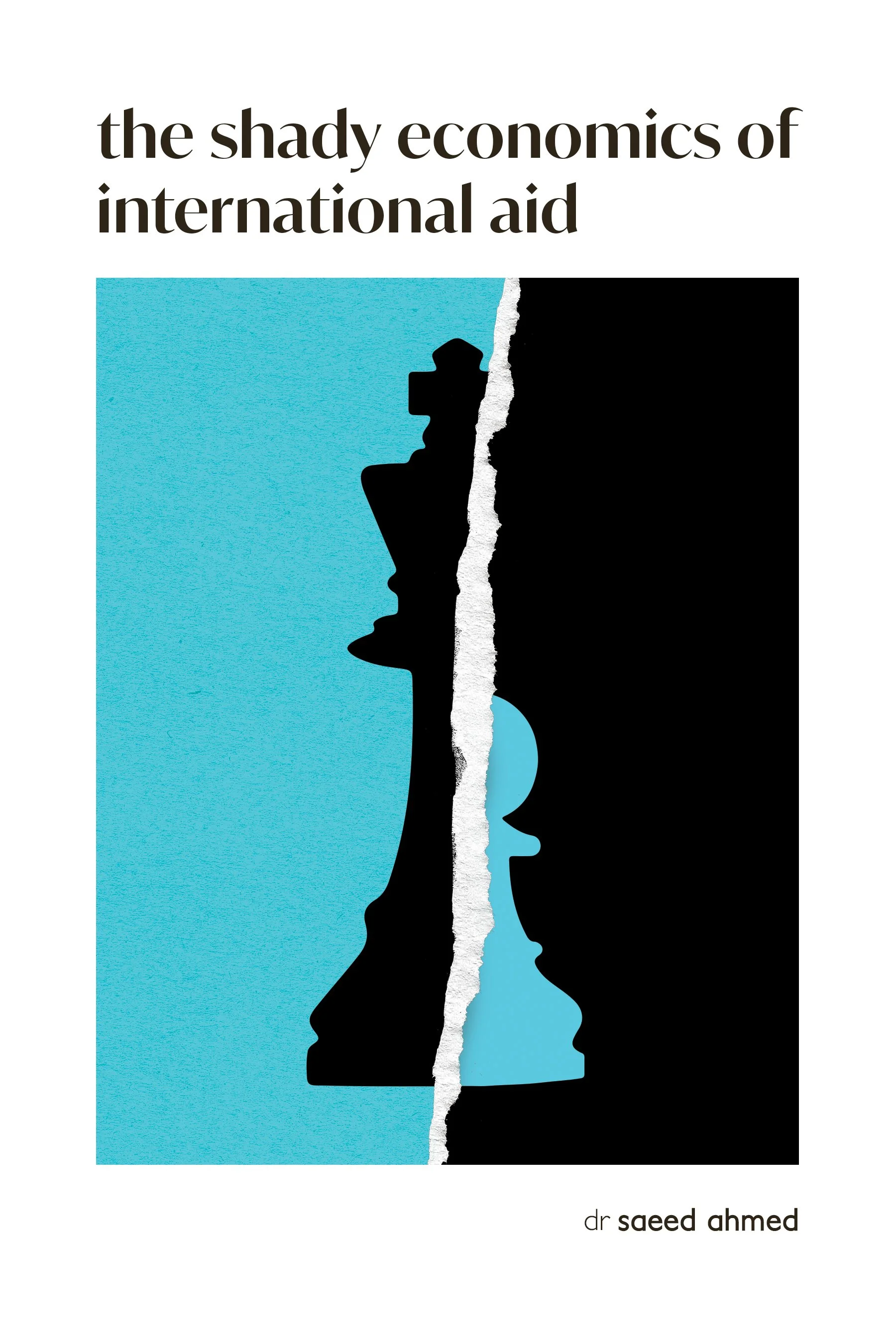
In this book, Dr. Saeed Ahmed (PhD from Cambridge University) supports the importance of humanitarian aid while showing that economic development programs rarely bring about meaningful or long-lasting changes. Dr. Ahmed calls on taxpayers, policymakers, lawmakers, and leaders of aid organizations to implement major reforms to the international economic development system. The book is a must-read for anyone who cares about the future of billions of people in developing nations.

Copyright 2025

Paperback | 300 pages

ISBN: 9798990623668

ISBN Ebook: 979-8-9906236-7-5

Library of Congress Control Number: 2025932238

Cover Design: James Clarke

Shipping Only to US Customers.

Outside the US? Please use your preferred online retail bookstore.

External purchase Links

Why this Book is Important

Taxpayers in wealthy nations fund a $200 billion international aid and development industry. They believe that these generous contributions are being used wisely to help developing nations strengthen their economies and lift their people out of poverty. International economic development agencies present themselves as torchbearers for a better world. However, as Dr. Saeed Ahmed argues, the reality is starkly different.

Basing his arguments on robust economic data from around the world, and on his high-level work at Pakistan’s central bank and the International Monetary Fund, Dr. Ahmed exposes serious problems in the international aid system.

The author argues that the international economic development system, because it lacks proper accountability measures or success metrics, facilitates endemic corruption, and rampant misallocation and misutilization of money, within recipient nations. Thus, says Dr. Ahmed, the aid usually leaves developing nations in worse condition. As the economic data shows, many developing countries have deteriorated in terms of tax collection, poverty rates, government effectiveness, human development, and access to justice.

Dr. Ahmed calls on taxpayers, policymakers, lawmakers, and leaders of aid organizations to implement major reforms. The Shady Economics of International Aid is a must-read book for anyone who cares about the future of billions of people in developing nations.

Table of Contents

1) That Inspiring (but False) Narrative; 2) A “Noble Cause” or Self-Interest?; 3) The Kingdom of Consultants and Contractors; 4) An Overview of International Aid in Pakistan; 5) Pakistan’s Professionals Outpace Foreign Consultants; 6) The Hijacking of Pakistan’s Self-Sustaining Development Program; 7) The Failure of Foreign-Funded Tax Reforms; 8) International Aid, Energy Reforms, and Debt; 9) Addiction to IMF Programs; 10) Dismal On-the-Ground Realities; 11) Economic Theory, Evidence, and International Aid; 12) Self-Seeking Donors; 13) Do We Really Need International Aid?; 14) A Six-Point Plan for Reforming International Aid

Epilogue | Acknowledgements | About the Author | Bibliography | Endnotes | Index

Reviews

  • “In a timely and powerful exposé, Saeed Ahmed reveals how donor agendas perpetuate a cycle of aid dependency and corruption in developing countries. Tracing the path of billions in foreign funds as they distort policies, stifle growth, and exacerbate crises, he uncovers the exploitative underpinnings of ostensibly “helpful” programs—and the vested interests they protect, among both donors and recipients.

    Saeed makes it clear that international aid is a broken system desperately in need of reform. With sharp economic analysis and compelling insights, he cuts through misinformation, prompting readers to reevaluate the true impact of foreign assistance. Beyond critiquing the status quo, he offers fresh perspectives on solutions and a practical roadmap for reform. Using Pakistan as a vivid case study, The Shady Economics of International Aid explains how self-reliance, accountability, and institutional integrity can become a reality, providing grounded hope for transformative change.

    Saeed’s work will speak to a broad audience—from university students to seasoned professionals—seeking a deeper understanding of real-world economics, international development, and policy reform.”

    Professor Paul Kattuman, Judge Business School, University of Cambridge, UK

  • “The Shady Economics of International Aid is a perspective-changing narrative. It is rich in insights, and with subtle and convincing arguments, the book lays bare the many tiring cliches associated with international aid. Saeed Ahmed writes from a life-time career of a developing country technocrat. We must pay heed to his reform agenda, lest the objectives of both the donor and the recipient remain disillusioned.” 

    Ashraf Mahmood Wathra, former Governor of the State Bank of Pakistan

  • In The Shady Economics of International Aid, Dr. Saeed Ahmed delivers a timely and critical examination of the global aid model and its effectiveness. As the shifting world order prompts a reassessment of US-centric multilateralism—including in the realm of international aid—this book offers a real, and at times painful, perspective on the challenges and inefficiencies of the current system. A must-read for anyone seeking to understand the complexities of global aid and its far-reaching implications.”

    Dr. Salman Ahmed, Global Head of Macro and Strategic Asset Allocation, Fidelity International, London UK

aBOUT THE aUTHOR

Dr. Saeed Ahmed has a PhD in economics from Cambridge University. He worked as a chief economist and voting member of Pakistan’s Monetary Policy Committee at the nation’s central bank and then worked as a senior advisor for the International Monetary Fund (IMF) executive board. He has extensive experience working with international aid organizations. Born into a low-income family in rural Pakistan, Dr. Ahmed has a deep compassion for the needs of people in developing nations. He is a contributing writer for Dawn, a leading English-speaking newspaper for Southeast Asia. (See two articles at the links below.)