Overcoming Information Chaos: An Interview with Danielle M. Reiff

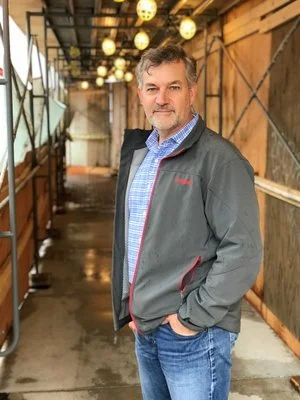
Danielle M. Reiff
To publish Overcoming Information Chaos, Danielle M. Reiff did a brilliant job of rallying thirteen remarkable coauthors—including a journalism professor, media literacy specialists, a legal scholar, a librarian, an elections expert, and others—to join her in addressing the ways today’s media landscape affects personal relationships and social cohesion. Danielle is the founder of Peacebuilders, a national initiative to inspire citizens to work together to build collective resilience against powerful attempts to divide us. A retired American diplomat, Danielle has worked to promote democracy and peace around the world.
Glenn: Americans seem to be divided, and even angry with each other, about nearly everything. In your new book, you and your coauthors demonstrate that our media systems foment social polarization. Could you summarize the relationship between social divisions and the media?
Danielle: As we settle into the digital age, we know a lot more about how the brain works than ever before. Research indicates that both social media and traditional media contribute to social and political divisions in the United States—specifically what social scientists call “affective polarization.” To gain and keep people’s attention when they are overwhelmed with incoming news and information, those who produce news and information are incentivized to publish sensational content that generates big feelings. As a result, the emotional centers of our brains and deeply held unconscious biases are triggered, causing us to respond irrationally. That makes us more likely to share inaccurate or even irresponsible information that could cause others harm.
The most dangerous bias triggered by our current media environment—even intentionally by political actors with narrow interests—is the in-group bias. Fear-mongering and dehumanizing language about “other” groups can amplify people’s narrow partisan and demographic identities, generate strong negative feelings about people who are not in our in-group, and make people believe their personal and policy beliefs are much farther apart from each other than they are. There are many causes of our social and political divisions in the US. The advent of digital news and information has been an accelerant, like throwing gasoline on a fire.
Glenn: We see social polarization in the news, but your book also shows how some types of media play a role in dividing families and friendships. The book shows statistics on the percentage of Americans whose relationships have been broken due to political disagreements. In fact, this happened directly to you. Could you describe what happened between you and your father?
Danielle: What happened between me and my father was a driving factor in my decision to write this book. After the US went digital, he started spending a lot of time each day on email and social media. My dad would sometimes send me things that made me question whether he was fully aware of what he was consuming. For example, many years ago, he sent me a derogatory article about Martin Luther King, Jr. When I looked up the media source, I realized it was known for white supremacist content.
I came back to the US from my last diplomatic assignment overseas in 2018. From that point on, our political debates were more heated than ever before. Sometimes, he made good points, and I adapted my thinking in response. But sometimes he would get downright aggressive in tone, calling me stupid or saying I “drank the Kool-Aid” because of something I said or believed. That was really hurtful. I struggled emotionally in those conversations.
Shortly after the 2020 election, he posted a racist video clip on Facebook. When I called attention to the racial dynamics, he stopped talking to me. I reached out a few times after that, but he never responded. He died in 2024, having not spoken to me since 2020. A few weeks after his death, I received a letter he wrote to me from his deathbed. It was filled with accusations that I supported political causes that were undermining the US Constitution. He cut me—his only child—out of his will because he thought I was compromising the sovereignty of our country. I had never heard of the causes he was accusing me of supporting. In the absence of dialogue, he ended up making many assumptions about me that simply weren’t true.
Glenn: The book uses the terms “information chaos” and “information disorder” to describe our situation today. What are the elements of information disorder, as we all experience it in daily life?
Danielle: Propaganda and hate speech have been around for a long time. In recent years, the vocabulary, nature, and understanding of information chaos have evolved. Experts now talk about “information disorder,” which generally includes misinformation, disinformation, and malinformation. In the book, we use the term “information chaos” interchangeably with “information disorder,” but the term “information chaos” seems to resonate with people’s understanding of what’s happening.
Misinformation is false information spread accidentally. For example, one of the book’s co-authors shares a story about seeing a news article about an active shooter near her daughter’s school while they were doing a drill. She initially panicked, thinking her daughter was in grave danger. But they soon realized the article was old. There was no active shooter in the area on the day of the drill.
Disinformation is false information that is spread intentionally, usually for the narrow benefit of those who create and disseminate it. I would put false narratives about the 2020 election being stolen in this category. Certain people stood to gain if Americans believed this false information. So, the lie was purposefully and strategically spread. The narrative was not supported by meaningful evidence, but it went viral. That was much easier to achieve in the age of social media than it would’ve been before that.
Malinformation is true, but it spreads from malicious intent. For example, people talk a lot these days about doxxing. That’s when someone’s personal information is shared publicly, for example their home address, as a kind of threat. Doxxing is an example of malinformation.
The other important element of information chaos we talk about in the book is “dangerous speech.” This terminology is based on the work of the Dangerous Speech Project. They studied the language employed before episodes of mass political violence around the world that encouraged people to commit or condone violence. For example, prior to the 1994 genocide in Rwanda, there were media outlets calling the minority group “cockroaches.” This way of dehumanizing “the other” makes it easier for people to commit or justify violence against them. There is a lot of dangerous speech circulating in the US these days. It’s a warning sign that we could quickly descend into greater political violence under certain circumstances.
Glenn: The book does a brilliant job of showing us how information disorder has worsened since the advent of the internet and social media. In your view, what are the primary historical changes in recent decades that have affected today’s chaos?
Danielle: The chapters by Deborah Clark Vance, Kathy Keily, and Christopher Savage go into the interesting history to explain how we got to where we are today.
Before the digital age, there were some built-in protections against the information chaos we see today. There were only a handful of major networks and newspapers that most people read, and they set the agenda. Those outlets employed professional journalists who were bound by professional ethics to check facts and seek out the major sides of a story before publication. Journalists and news organizations knew their reputations were on the line with every story, and they were liable to be sued if they published false information. This created a shared understanding of current events—not because everyone agreed, but because everyone was working from the same baseline facts.
Then, when the digital revolution hit, everything changed. Our sources of news and information have become much more fragmented. There is now much more poor-quality information polluting our information ecosystem.
The advent of satellite communications was an important moment. Suddenly, there were endless cable channels to watch on TV instead of just the handful of major networks. Obviously, when the internet and social media went mainstream, those were game-changing moments. It happened very quickly that we started to gather information and interact with people in very different ways than ever before.
The internet also forced news outlets to grapple with new business models. People slowly stopped buying hard-copy newspapers and magazines, and the bulk of advertising transitioned to the online space. As Dr. Michael Spikes explains in his chapter, we now have news deserts across the United States where there are few to no local news outlets covering what’s happening in our communities. As a result, people are more likely to follow national and international news where they aren’t grounded.
If you think about information disorder as a social and political illness, the virus has spread incredibly far and wide. What we are experiencing now is a body politic riddled with toxicity, which puts our democratic lives and the American experiment with self-governance at high risk.
Glenn: You and your thirteen coauthors present an overarching case that “the government and the law will not save us” from information disorder. What are the primary barriers against developing sound regulations and laws to create a healthier media environment?
Danielle: That’s right. Nobody is coming to save us from information disorder. There are many barriers to effectively regulating our way out of information chaos, as Chris Savage discusses in his chapter. One of them is the First Amendment, which guarantees free speech and creates a high bar for government intervention. There was a law passed in 1996 that protects social media platforms from legal liability for content generated by and posted by the people who use them. In other words, unlike the traditional media which can be sued if they publish false information, there is no accountability for social media platforms or the people who use them when they post poor quality information or disinformation. Even if we do enact greater regulation of social media content, which I earnestly hope we will do, it is logistically challenging to moderate millions and billions of posts each day. AI could help, but we all know that AI also makes critical mistakes sometimes. So that’s not a cure-all. Importantly, the social media platforms are not interested in greater regulation. Cultivating—or at least not limiting—outrage is incredibly profitable! So, we need loud and consistent organizing and advocacy around specific regulations to overcome the powerful tech lobby. Ultimately, these are extremely difficult policy issues to grapple with, and we are far from having sufficient agreement or consensus in the US that we even have a problem, much less what to do about it.
Glenn: What you all are saying is that, in a democratized media landscape where lawmakers can’t do much to help us, everyone needs to A) grow in our ability to defend ourselves from misinformation and disinformation, and B) learn how to have a positive influence as agents in today’s media environment. How does Overcoming Information Chaos help us with these needs?
Danielle: The cancer of information disorder will continue to spread throughout the body politic and debilitate us until we learn how to prevent and overcome it. That will take hard work from all of us as we learn to be more savvy and more responsible with the information we consume and share. Overcoming Information Chaos was written to translate available evidence about how to mitigate information chaos so that everyday Americans could get more engaged in building a culture of media literacy in our country. We offer some practical recommendations: believing that you have an impact on the information ecosystem and the world around you; slowing down when interacting with news and information so that your reaction is not hijacked by emotions and deeply ingrained unconscious biases; taking responsibility when you share things that contribute to information disorder; and, if you must correct someone, it’s more effective when the person trusts you and you do it compassionately. So, please stop the rage-baiting and cancel culture!
Glenn: Let’s return to the central thesis of the book, which is that media literacy is essential for building strong personal relationships and for building social cohesion. You have worked around the world as a peacebuilder. This work has been your life passion, your calling. In the book’s last chapter, you present “A Peacebuilder’s Manifesto for the Digital Age” in which you present crucial ideas for what it takes to strengthen peace in a diverse democracy. Could you share a few of those principles?
Danielle: Yes, the thesis of the book is that we must think about media literacy as a critical approach to peacebuilding. In the last chapter, I lay out a few foundational aspects of cultivating peaceful communities. First, I share why the core values of universal love, nonviolence, and unity in diversity are central to peace. Then, I lay out an evidence-based framework for building positive peace in our communities, our country, and the world.
The first step involves staying open-minded and open-hearted; in other words, not getting trapped in our biases, to actively build trust and community across our divides.
The second step is to use nonviolent approaches to block initiatives and overtures that are inconsistent with the values of a peacebuilder. When people, institutions, and countries are behaving as bullies or abusers, they are not in the right frame of mind to be actively engaging in building peaceful communities.
The third step is critical. Beyond just cultivating a culture of peace, we also have to reform existing institutions and/or build new ones to enable collaborative problem solving across our divides.
Finally, when our relationships on the personal or political level become strained or break, then we need to engage in repair and reconciliation processes. If we want to cultivate peaceful communities, we can’t just cancel each other or write each other off when we disagree. We have to learn how to treat each other with dignity and respect as fellow human beings, and to stay in constructive community—in a state of unity in diversity—even when it’s hard.
The last chapter of the book ends with a little American history from the end of the Civil War forward, explaining how our lack of reconciliation over the past 150 years is contributing to our current problems. The manifesto part is an impassioned plea for all Americans to contribute to building positive peace in the US.
Glenn: The book cites several fascinating ways that Americans are experimenting with new forms of democratic governance. Could you share a couple of examples?
Danielle: In addition to peacebuilding, this is one of my favorite topics! Democracy is essentially rule by and for the people. Yet, many don’t realize there are different models of democracy based on how engaged citizens are able to be in political processes that affect them. Over the past few decades, there has been growing criticism of the liberal democratic model that emerged after World War II. Many people in the US and around the world increasingly say that democracy doesn’t meet their needs. Simply voting and advocating with elected representatives isn’t getting us where we want and need to be. As a result, there are experiments ongoing in many places to get citizens more involved in democratic decision-making well beyond elections.
I am particularly excited about the growing wave of deliberative democracy in the US. Cities across the country are now experimenting with citizens assemblies, where a representative sample of everyday citizens are selected through a random selection process called “sortition.” Those citizens then gather to receive state-of-the art education about a policy issue before engaging in facilitated deliberations to come up with nuanced policy proposals agreeable to all participants. There has even been one state-level Citizens Assembly on electoral processes in New Hampshire. Over the next few years, look for more deliberative processes and citizens assemblies to take place at all levels in the US!
Glenn: Finally, as you look to the future of America, are you optimistic about our ability to maintain unity in our diversity? Why or why not?
Danielle: Here we are in 2026, the year we will celebrate the two-hundred-and-fiftieth anniversary of the signing of the Declaration of Independence. Since our founding, we have been involved in many wars, including our own Civil War that destroyed American cities and killed well over half a million countrymen. Yet, during that time, we’ve also continued to create a more perfect union by increasing inclusion in our great experiment in self-governance. Women, African Americans, and many others have gained equal suffrage and important rights. Ultimately, conflict and democratic progress flow in cycles. So, while we are under great stress as a nation right now and our political system appears to be falling apart before our very eyes, I don’t think that’s the end of the story.
Under the surface, there are many important things happening that aren’t being covered by the press. Communities are coming together in service to each other, there are growing efforts to bridge our divides, and peace-loving people are organizing. It’s just a matter of time before the momentum of those efforts creates a fundamental shift, and we are once again on a trajectory toward deeper democracy and positive peace. In the wake of the current chaos, I myself am doing everything in my power to build the most inclusive, participatory, and deliberative democracy the US has ever known. I hope more people join me. Peacebuilders unite!